
Why Engineers Must Learn to Love the Learning Zone
(And How to Stay There Without Losing Your Mind)

We've all seen it — a new system rolls out, a bug appears in production, or someone suggests rewriting a legacy module. Suddenly, the Teams channel lights up with frustration:
“Why is this API so confusing?”
“This architecture makes no sense!”
“Let’s just go back to the old way.”
Sound familiar?
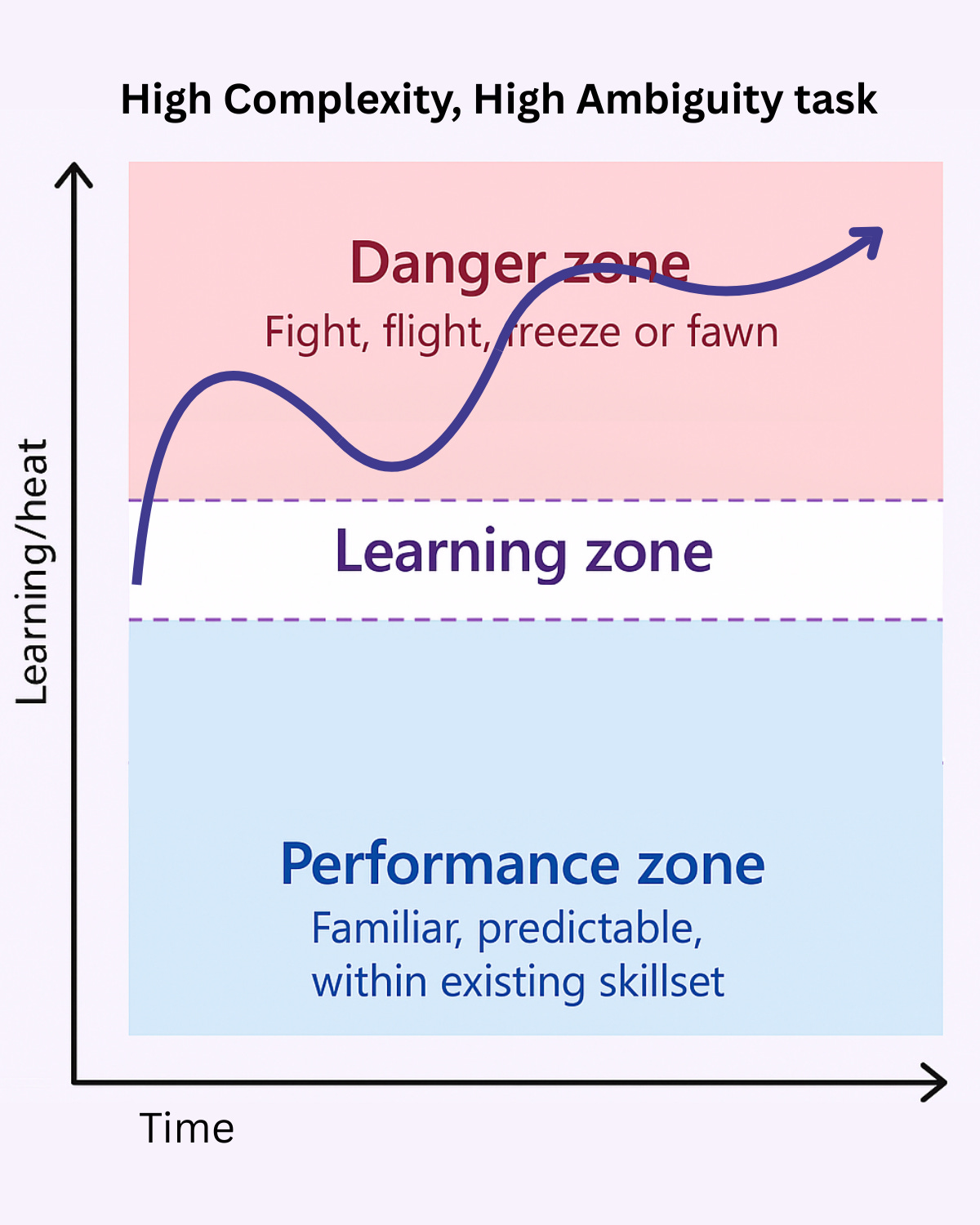
That’s the classic engineer move: we love the Performance Zone, we crave new challenges, but when the discomfort kicks in, we skip the Learning Zone and dive headfirst into the Danger Zone — blame, panic, and disengagement.
So how do we change that?
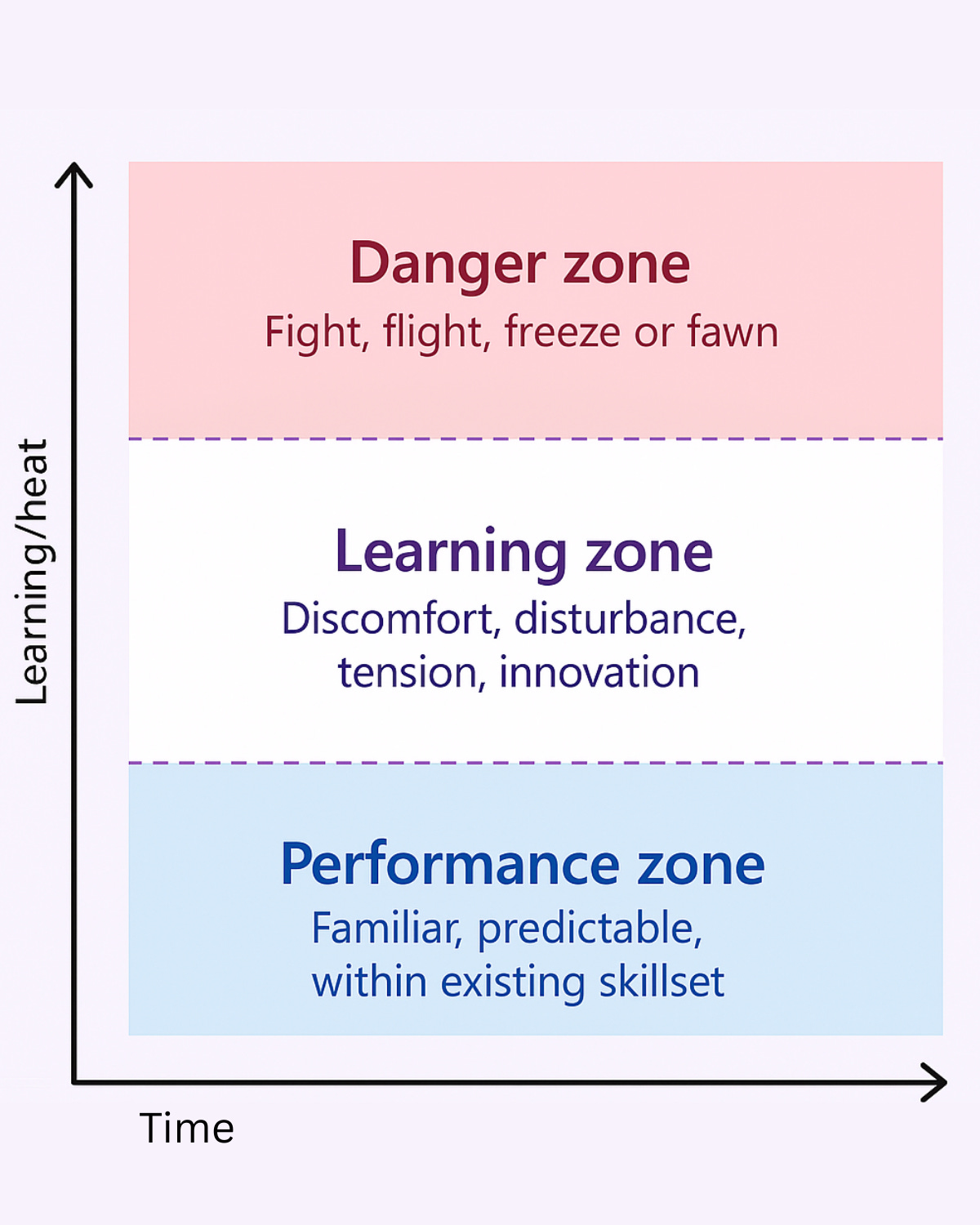
Let’s Break Down the Zones
🟦 Performance Zone
Where things are smooth. You know the tech stack. You write clean, predictable code. Everything’s in your control. But you’re not learning anything new.
🟨 Learning Zone
Where you feel the tension. You’re experimenting. Things break. Your brain hurts. But this is where the magic happens — real, adaptive learning.
🟥 Danger Zone
Where it gets too hot to handle. You feel overwhelmed. You shut down, lash out, or just freeze. Nothing good comes from here.
Common Engineering Examples
Performance Zone:
You're building features in a familiar framework like React, Spring Boot, or Django. You’ve done it a hundred times. You’re fast and efficient.
Learning Zone:
You're switching to a new paradigm — say, moving from REST to GraphQL, or from relational databases to event sourcing. You're not fast. You're unsure. But you're growing.
Danger Zone:
You’re handed a cryptic legacy C++ codebase using sockets and Win32, and no one around can help. You don’t know where to start. You feel stuck, frustrated, and ready to give up.
(“This codebase is trash!” is a classic Danger Zone response.)
Why You Need to Stay in the Learning Zone (Especially Now)
With AI, things are evolving faster than ever. New tools, models, frameworks, and best practices emerge weekly. If you're not constantly learning, you're falling behind.
But here's the kicker:
You can't grow unless you're okay being uncomfortable.
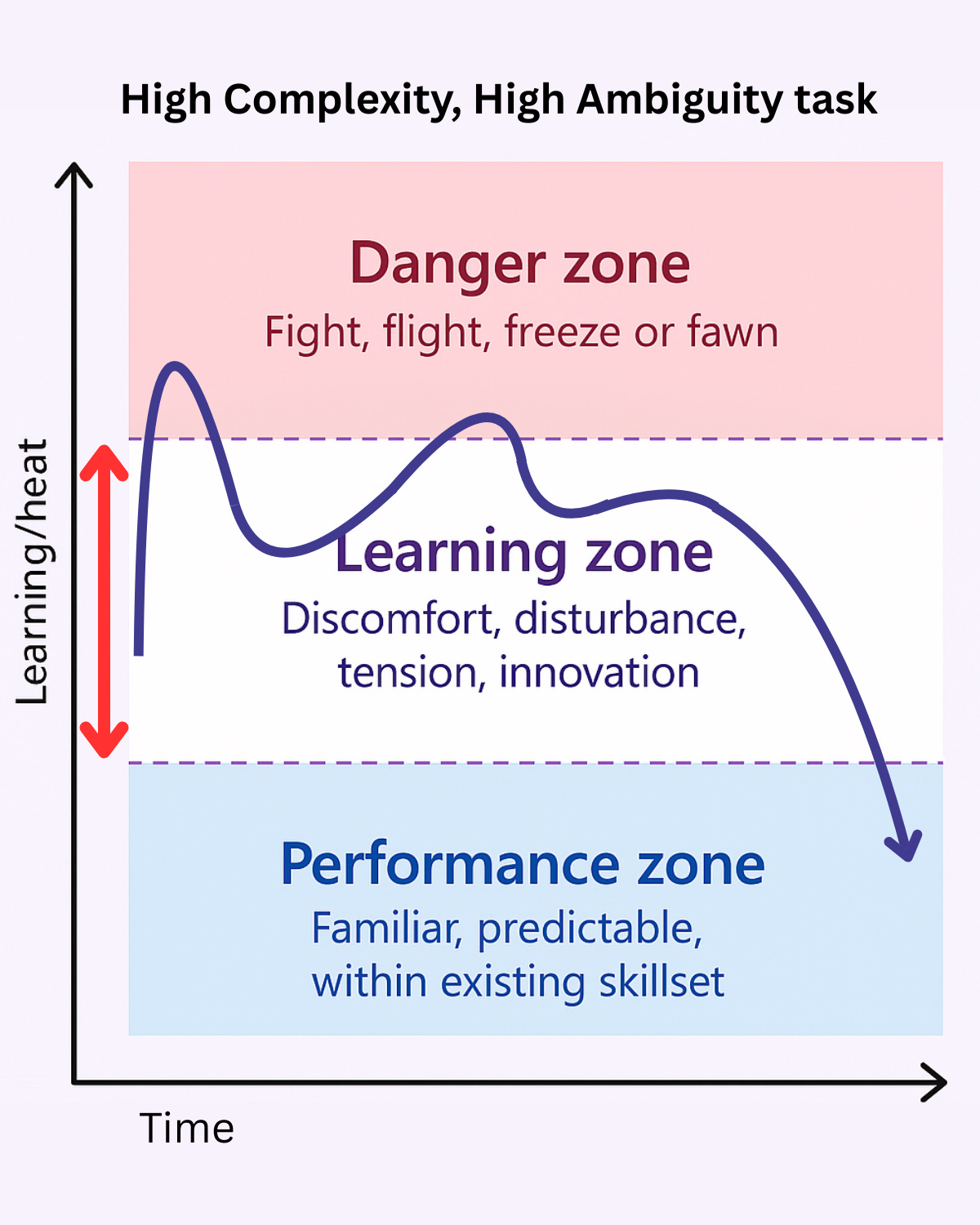
The Goal: Expand Your Learning Zone
The good news? You can train yourself to stay longer in the Learning Zone before tipping into the Danger Zone. Even better — you can expand the zone itself so it becomes more comfortable over time.
🔧 5 Strategies to Expand Your Learning Zone
1. Name the discomfort.
Just saying “This is hard, but I’m learning” reframes the stress. It’s not a sign of failure — it’s a sign of growth.
2. Break the problem down.
Overwhelm usually comes from taking on too much at once. Divide the work into small experiments or questions.
3. Use “yet” language.
Instead of “I don’t get this,” say “I don’t get this yet.” That one word keeps the door open for progress.
4. Build psychological safety.
Create (or seek out) environments where it’s okay to ask questions, admit you’re stuck, and share partial knowledge.
5. Pair AI with curiosity.
Use AI tools like ChatGPT not just to get answers, but to explore why things work the way they do. Let them guide your learning, not shortcut it.
Final Thought: Learn to Love the Tension
If you’re an engineer, you already know that the best systems are built under pressure, with iteration, testing, and feedback.
So why not apply the same to yourself?
Stay in the Learning Zone. Stretch it.
Breathe through it.
Make it your new comfort zone.
Because the future belongs to those who can adapt without breaking down.
I beg to differ, if everything is left to individuals to explore, it’s gonna be a tight one. IMO this is where mentoring comes into picture. As a leader I need to figure out if someone is in danger zone, and have to pull them out, good I have this blog to point them to.